How Abstract 3D Colorful Fluid Shapes Are Redefining Visual Storytelling
Walk into any modern design studio, scroll through a cutting-edge portfolio, or glance at the latest brand identity work, and you will almost certainly encounter them—those swirling, undulating, brilliantly hued forms that seem to defy gravity and logic. Abstract 3D colorful fluid shape visuals have become one of the most dominant aesthetics in contemporary digital art and commercial design. But this isn't just a fleeting trend. There is real substance behind the beauty, and understanding what makes these forms so compelling can transform how you approach your own creative projects, whether you are a seasoned designer, a marketer, or someone simply curious about the direction of visual culture.
What Exactly Are Abstract 3D Colorful Fluid Shapes?
At their core, these are digitally rendered three-dimensional forms that mimic the behavior of liquids, gels, smoke, or other pliable materials. Unlike rigid geometric objects, abstract 3D colorful fluid shape designs are characterized by organic, unpredictable contours, smooth transitions, and a luminous, almost tactile quality. They are created using specialized 3D software, particle simulations, and procedural algorithms that calculate how virtual materials should flow, stretch, and blend. The result is something that looks both impossibly complex and naturally effortless, like a snapshot of a living, breathing entity caught in mid-motion.
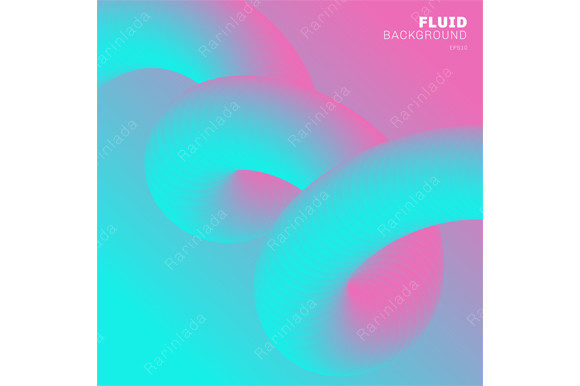
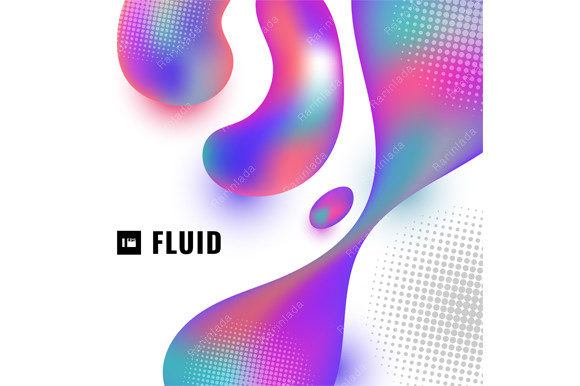
What sets them apart from older forms of abstract art is the dimension of depth. Traditional 2D fluid art relies on texture and color alone. In the 3D realm, light interacts with the surface, shadows fall across curves, and the viewer can sense volume and weight. This adds a layer of realism and immersion that flat imagery simply cannot achieve. The "colorful" aspect is equally critical. Gradients are not linear but volumetric, with hues bleeding into one another through the simulated thickness of the material. You might see a deep violet transitioning into neon cyan through a ribbon of translucent magenta, all within a single continuous form.
Why This Aesthetic Has Exploded in Popularity
The rise of abstract 3D colorful fluid shape visuals is no accident. Several converging factors have pushed this style from niche experimental art into mainstream visibility. First, the software tools have become dramatically more accessible. Applications like Blender, Cinema 4D, and Houdini, along with GPU-accelerated render engines, allow artists to iterate quickly without waiting hours for a single frame. What used to require a render farm can now be done on a powerful laptop.
Second, there is a growing appetite for visual distinctiveness. In a world saturated with stock photography, minimalist flat design, and predictable layouts, brands and creators are desperate for something that stops the scroll. An abstract 3D colorful fluid shape composition is inherently unique. Because these forms are generated through simulations with random or semi-random parameters, no two iterations are exactly alike. This offers a level of originality that is incredibly valuable for companies looking to establish a memorable visual identity.
Third, the aesthetic aligns perfectly with themes of transformation, innovation, and fluidity. Tech companies, health and wellness brands, music producers, and fashion labels have all adopted this style because it communicates movement and change. It suggests that the brand is dynamic, forward-thinking, and not constrained by rigid boundaries. The fluidity of the shapes becomes a metaphor for adaptability and flow.
Key Characteristics That Define High-Quality Fluid Shapes
Not all abstract 3D colorful fluid shape work is created equal. When evaluating or creating these assets, several qualities separate the mediocre from the mesmerizing.
Realistic Material Behavior
The best fluid shapes behave in ways that feel physically plausible, even if they are entirely fantastical. Surface tension, viscosity, and refraction should be considered. A shape that looks like thick honey should have different highlights and edge softness than something resembling thin alcohol. Skilled artists use shaders that simulate subsurface scattering, giving the forms a soft, glowing interior rather than a flat, hard shell.
Dynamic Lighting and Environment
Lighting is everything in 3D. A fluid shape that is poorly lit can look like a lump of colored plastic. Exceptional work uses multi-point lighting, global illumination, and sometimes HDRI environments to create dramatic highlights and deep, rich shadows. The interplay of light across the undulating surface reveals the form's three-dimensionality and gives it that coveted premium feel.
Color Harmony and Gradient Complexity
Color palettes in abstract fluid shapes are rarely simple. Instead of using solid colors, creators often employ complex gradients that shift hue, saturation, and brightness across the form's volume. A shape might be deep blue at its core, shift to turquoise at its middle, and have a rim of bright cyan where light catches it. The most effective designs use color theory deliberately—complementary colors for tension, analogous colors for calm, or triadic schemes for vibrancy.
Compositional Balance
Even though the shapes are organic, they must still serve a compositional purpose. A well-designed fluid shape should guide the viewer's eye through the frame. It can create leading lines, frame focal points, or provide a sense of depth by overlapping with other elements. The best artists treat the fluid not as a random blob but as a deliberate sculptural element within a larger layout.
Practical Applications Across Industries
The versatility of abstract 3D colorful fluid shape assets means they have found homes in a surprising range of contexts. Understanding these applications can help you decide where this aesthetic fits into your own workflow.
Brand Identity and Logo Design
Several forward-thinking companies have moved away from static, flat logos toward dynamic identity systems built around fluid shapes. These logos can be animated, transformed, and adapted for different contexts. A tech startup might use a fluid shape as its primary mark, animating it for use in video intros, social media, and app loading screens. The shape becomes a living, evolving part of the brand, rather than a fixed icon.
Web and UI Design
In web design, abstract 3D colorful fluid shape elements are often used as hero section backgrounds, divider elements, or hover-state animations. They add a layer of depth that makes a page feel less flat and more engaging without being distracting. Because these shapes are typically rendered with smooth gradients and soft edges, they blend well behind text and other UI elements without creating visual noise. The key is to use them sparingly and let them breathe.
Music and Entertainment Visuals
The music industry has fully embraced fluid 3D aesthetics for album covers, music videos, and live performance backdrops. The shapes can be synced to audio, pulsing and morphing in real time. This creates a synesthetic experience where the viewer can almost "feel" the music through the movement of the color and form. For electronic, ambient, and experimental genres, this is a natural fit. But even pop and hip-hop artists have used these visuals for a more futuristic, polished look.
Product Design and Packaging
In physical product design, fluid shapes appear as patterns on packaging, custom bottle forms, or even as inspiration for furniture and home decor. A perfume bottle shaped like a frozen fluid drop, or a skincare package that uses swirling gradient patterns, communicates luxury and organic sophistication. The 3D fluid aesthetic translates surprisingly well to physical objects, especially when using techniques like gradient printing or iridescent coatings.
Tools and Workflows for Creating Fluid Shapes
If you are eager to start incorporating abstract 3D colorful fluid shape visuals into your own projects, the ecosystem of tools is richer than ever. Here is a practical overview of what is available at different skill levels.
For Beginners: No-Code and Template Solutions
You do not need to learn complex simulation software to leverage this aesthetic. Platforms like Spline and Vectary offer browser-based 3D editors with presets for fluid and blob shapes. You can tweak parameters like smoothness, color, and lighting without writing a single line of code. There are also marketplaces on Envato, Creative Market, and ArtStation where you can purchase pre-rendered abstract 3D colorful fluid shape assets, including 4K videos and transparent PNG sequences. This is a quick way to add high-quality visuals to a presentation, social post, or website.
For Intermediate Creators: Blender and Cinema 4D
Blender is a free, open-source powerhouse that can create stunning fluid simulations using its Mantaflow engine. There are countless tutorials on YouTube specifically for creating abstract fluid shapes with metaballs and force fields. Cinema 4D, while paid, is widely considered the most intuitive tool for this kind of work, with an excellent motion graphics workflow and built-in noise shaders that make organic shapes easy to generate. Both tools support GPU rendering with Cycles, Octane, or Redshift, which is essential for fast iteration.
For Advanced Users: Houdini and Real-Time Engines
Houdini is the industry standard for high-end fluid and particle simulations. It is procedural, node-based, and incredibly powerful, but it has a steep learning curve. Artists using Houdini can create fully custom fluid behaviors, simulate millions of particles, and output geometry that is ready for rendering or real-time use in engines like Unreal Engine and Unity. This is where you see the most experimental and breathtaking work, often used in feature films and high-budget commercials.
Practical Considerations Before Adopting Fluid Shapes
As compelling as this aesthetic is, it comes with practical challenges that you should consider before committing to it for a project.
Performance and File Size
High-resolution abstract 3D colorful fluid shape renders can be extremely heavy. A single frame might be tens of megabytes, and animations can quickly balloon into gigabytes. Using these as website backgrounds or within apps requires careful optimization. Consider using compressed video formats like WebM, or rendering at lower resolutions and upscaling. For real-time applications, you may need to bake the animation into sprite sheets or use lower-poly proxy geometry.
Over-Saturation and Distinctiveness
As more brands adopt fluid 3D aesthetics, there is a risk of visual fatigue. What looks innovative today might look generic tomorrow if used without thoughtful differentiation. The key is to develop a unique color palette, a signature motion style, or a specific material treatment that sets your work apart. Simply using the same gradient blob that everyone else is using will not help you stand out.
Brand Consistency
Fluid shapes are, by nature, somewhat unpredictable. If your brand relies on strict consistency and instant recognition (like a logo that always appears in the exact same form), a fluid approach might not be appropriate. Consider using fluid shapes only in certain contexts—perhaps for social media, video content, or packaging—while keeping your core identity stable. This gives you the best of both worlds: freshness without losing recognition.
Where the Trend Is Heading Next
The evolution of abstract 3D colorful fluid shape design is far from over. We are already seeing the integration of generative AI tools that can create these forms from text prompts, lowering the barrier even further. At the same time, real-time interactivity is growing. Imagine a website where the fluid shape responds to the user's mouse movement, or a product configurator where customers can change the color and flow of the shape in real time. Haptic feedback and VR are also opening up new possibilities for experiencing fluid forms as tactile, immersive environments.
Another emerging direction is the combination of fluid shapes with photorealistic materials—chrome, glass, liquid metal, and iridescent films. This creates a hybrid aesthetic that feels both futuristic and luxurious. As rendering technology improves, the line between abstract digital art and realistic visual simulation will continue to blur.
Whether you are a designer looking for inspiration, a business owner exploring visual identity options, or a hobbyist curious about 3D art, the world of abstract 3D colorful fluid shape offers rich territory to explore. It rewards experimentation, tolerates imperfection, and delivers results that feel genuinely alive. Start small, play with the tools, and let the shapes guide you toward something unexpected. That is the entire point, after all—to capture the beauty of flow in a world that is constantly moving.